 Sign in
  Add Your Clinic
  USD $
USD $



Cornea Transplant in Vietnam
Search and Compare the Best Clinics and Doctors at the Lowest Prices for Cornea Transplant in Vietnam

 Ho Chi Minh City, Vietnam


 Cafe
Cafe  Mobility accessible rooms
  Parking available
  Read More
Ho Chi Minh City, Vietnam
Read More
Ho Chi Minh City, Vietnam 


 J M, 29 August 2020
  Free Wifi
 International newspapers
 Local tourism options
 Local transportation booking

 Ha Noi, Vietnam


 Interpreter services
  Laundry
Ho Chi Minh City, Vietnam
Laundry
Ho Chi Minh City, Vietnam 


 Can Tho, Vietnam


 Ha Noi, Vietnam


 Ho Chi Minh City, Vietnam


 Bac Ninh, Vietnam

 Bac Ninh, Vietnam


 Thai Nguyen, Vietnam


Our partner clinics in are accredited by the following associations


 Free
Free  Best Price
  Widest Selection
  Risk-Free
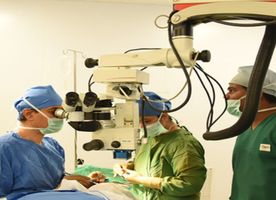



What does a Cornea Transplant Procedure Involve?
The procedure will entail the surgeon precisely removing the affected portion of your cornea and deftly replacing it with a healthy cornea from a donor. Each step of this intricate ballet performed in the depths of your eye entails the highest level of precision and care.
The replaced cornea is then securely sutured into position, and the eye is securely covered to foster healing. Understanding this process, in all its profound detail, can ease your anxiety. Knowing what to expect can shift your perspective from one of undirected fear to a more focused embrace of this journey that will ultimately improve your vision and your quality of life.
What is the cost of Cornea Transplant in Vietnam?
The price of Cornea Transplant in Vietnam depends not several factors. The rates may cover not only the surgical procedure itself but also pre-op assessments, surgeon's fees, anesthesiology, hospital fees, and, in some scenarios, follow-up visits. Therefore, a direct comparison of costs might be misleading, as procedures aren't strictly equivalent across all hospitals.
Nonetheless, reliable online databases often provide average cost estimates as a starting point. Yet, my advice to you is to have a candid discussion with your chosen healthcare centre about the cost structure so you can better understand and plan for the financial aspects of your treatment.
How Long Should I Stay in Vietnam for a Cornea Transplant Procedure?
Determining the length of stay in a particular area for a Cornea Transplant necessitates an understanding grounded in both the complexities of your personal recovery journey and the general recovery timelines associated with this procedure. A golden standard, by most counts, suggests that preparing for a stay of approximately 1-2 weeks in the area post-surgery is a pragmatic measure.
This timeframe is designed not only to accommodate the physical healing that comes with a Cornea Transplant but also to provide you with the mental peace of knowing that medical assistance would be at arm's length should any postoperative complications arise.
What's the Recovery Time for Cornea Transplant Procedures in Vietnam?
The recovery time for Cornea Transplant procedures in your location is typically a challenging aspect to predict as it depends on numerous individual factors such as overall health status, age, and body’s response to the procedure. However, most specialists suggest that it takes around 3 to 12 months or more for complete vision restoration.
In some instances, the patient might even experience steady improvements up to a year post-surgery. Embrace this road to recovery with patience and positivity as each passing day is a stride towards your ultimate goal, the precious gift of sight.
What sort of Aftercare is Required for Cornea Transplant Procedures in Vietnam?
The aftercare following a Cornea Transplant presents another vital segment of this journey. During the initial days, precautions to protect the eye from injury, refraining from too much screen time, and appropriate rest is essential. Regular follow-up visits to your ophthalmologist to monitor healing, visual acuity, and response to medications are critical to successful rehabilitation.
Let the diligent aftercare be your ally in this crusade towards sight restoration. Selecting a reputable medical facility that supports you in this aftercare and healing phase is tantamount to paving a smoother path to recovery.
What's the Success Rate of Cornea Transplant Procedures in Vietnam?
Ascertaining the exact success rate of Cornea Transplant procedures in Vietnam necessitates an examination of several procedural, personal, and geographical factors. Nevertheless, statistics at a general capacity reveal a highly promising rate of success. Medical studies show success rates of Cornea Transplant procedures ranging from 85 to 90 percent.
This figure is indeed heartening, but always bear in mind the importance of individual factors such as the patient's overall health, the skill of the surgical team, and the quality of aftercare. In Vietnam, it is essential to choose a medical facility known for its excellence in ophthalmologic care. Your fears are entirely understandable, considering the intricate and delicate nature of the operation. However, the procedure's high success rate should help in mitigating some of your concerns.
Are there Alternatives to Cornea Transplant Procedures in Vietnam?
As for exploring alternatives to Cornea Transplant procedures, it is important to understand that decisions relating to eye health should not be taken lightly. The choice to undergo surgery is significant, particularly in cases involving potential sight restoration or preservation. In Vietnam, there are potentially alternative treatments available, dependent on the severity and nature of your corneal defect. Therapies such as specialty contact lenses or collagen cross-linking may be viable options for certain patients.
This, again, underlines the need for a thorough medical consultation with a seasoned ophthalmologist. They can guide you through the intricacies and nuances of the choices before you, providing you with the information necessary to make an educated decision.
This information has been accurately sourced and verified by a medical professional for its accuracy, however, we strongly recommend you to consult with your doctor before pursuing medical procedures overseas.



 MyMediTravel CN