 Sign in
  Add Your Clinic
  USD $
USD $



Mole Removal in Singapore
Search and Compare the Best Clinics and Doctors at the Lowest Prices for Mole Removal in Singapore
 Central, Singapore


 Airport pickup
  Free Wifi
  Hotel booking
  Interpreter services
  Read More
Central, Singapore
Central, Singapore
Read More
Central, Singapore
Central, Singapore 

 Central, Singapore
 Nikki, 21 September 2020


 Central, Singapore
 Bong Min, 20 September 2020


 Central, Singapore
 Sharon Brooks, 05 September 2020
Central, Singapore
Jasmine Sng, 20 July 2020
Sharon Brooks, 05 September 2020
Central, Singapore
Jasmine Sng, 20 July 2020 
 Central, Singapore

 Central, Singapore


 Central, Singapore


 _ Grit, 23 January 2020
  Central, Singapore
Central, Singapore
Central, Singapore 

 Central, Singapore

 Central, Singapore
  Central, Singapore
 Central, Singapore


 Parking available
  Phone in the room
Central, Singapore
Phone in the room
Central, Singapore 
 Central, Singapore
 Central, Singapore


 Hayley Chiam, 14 September 2020
  Translation services
 Central, Singapore


 Murugammal Dalinayodo, 17 September 2020


Our partner clinics in are accredited by the following associations


 Free
Free  Best Price
  Widest Selection
  Risk-Free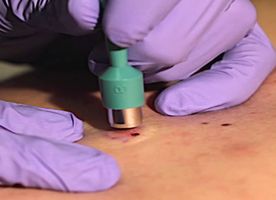
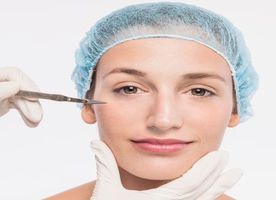
What you need to know about Mole Removal in Singapore
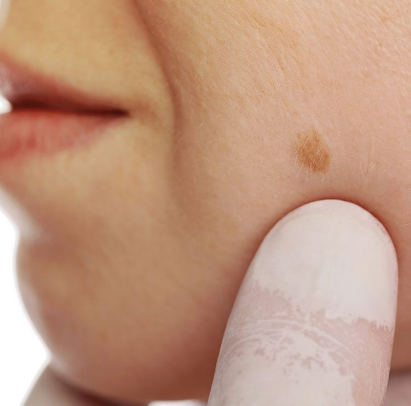
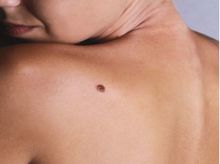
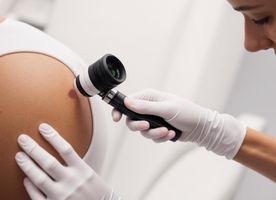
A mole is a cluster of pigmented skin cells that can appear anywhere on your body. It is a common type of skin growth that usually shows up during childhood or adolescence. Most moles are benign (noncancerous).
If you do not like the way a mole looks or feels, or if they get in your way (such as when you dress or shave), you can have it removed through a procedure called mole removal. Mole removal can also be performed if a mole on your body is found to be cancerous. In this case, mole removal is done to get rid of the dangerous cells.
What does a Mole Removal Procedure Involve?
Mole removal can usually be done by a dermatologist in a single office visit. There are several techniques used to remove a mole:
Shave excision
During shave excision, your doctor will give you a local anesthetic to numb the area around the mole. Then, a thin tool similar to a razor is used to gently slice away your mole and some tissue beneath it. Your doctor may also use a device with a small electrode at its end to perform a procedure called electrosurgical feathering. The feathering is done to help reduce the appearance of the excision as it can blend the edges of the wounds with the skin that surrounds it. In most cases, no stitches are needed for a shave excision. Once the surgery is completed, your doctor may examine the mole under a microscope to check for signs of skin cancer.
Surgical excision
Surgical excision is deeper than a shave excision. After numbing the area of the mole, your doctor will cut out the entire mole, the subcutaneous fat layer underneath it, and some healthy skin around it using a scalpel or a sharp, circular blade. The wound is then closed with stitches.
Laser mole removal
Your doctor starts this procedure by applying local anesthesia around the area of the mole you want to remove. Then, laser ray is directed to the cells that form the mole. These cells absorb the laser ray, causing the mole to fumes away from the surface of your skin, while the adjacent skin remains intact.
How Long Should I Stay in Singapore for a Mole Removal Procedure?
Mole removal is usually an outpatient procedure, so you can leave the hospital as soon as your mole removal is complete. You can normally leave Singapore within a day or two. However, if your mole removal procedure involves stitches, you may need to stay longer, usually around a week.
What's the Recovery Time for Mole Removal Procedures in Singapore?
The recovery time for mole removal varies. It may take a few days to a few weeks for you to fully recover, depending on how large the mole was and how deep your doctor had to cut it. In general, a mole removal scar takes at least 2 to 3 weeks to heal. However, you should be able to return to your normal activities the next day after your procedure if the mole was small and your doctor does not need to make a deep cut. If you had stitches, it is recommended that you avoid doing any strenuous activities for a few days.
What sort of Aftercare is Required for Mole Removal Procedures in Singapore?
Your doctor will instruct you on how to care for yourself after the procedure. To reduce the size of a scar and decrease the chance of infection, you can do the following:
-
Avoid direct sunlight on the scar for at least six months. If you do go outside, ensure that your scar is covered with a strong sunscreen (at least SPF 30). Cover the scar with sun-protective clothing whenever possible.
-
Do not stretch the scar. A lot of movement on the area where the scar is located can stretch it and result in longer healing time and a bigger scar.
-
Always keep the incision site clean, moist, and covered.
Note that if your doctor’s instruction is different from any of the above, you should follow there instruction.
What's the Success Rate of Mole Removal Procedures in Singapore?
Mole removal is generally a straightforward, simple, and safe procedure with high success rates. The biggest risk after the procedure is scarring. The site can also get infected and bleeds. You can avoid both by carefully following your doctor's instructions to care for the wound until it is healed.
Are there Alternatives to Mole Removal Procedures in Singapore?
There are currently no other alternatives to mole removal than the procedures mentioned in this article. You may have heard or read a number of at home, “do-it-yourself” techniques to remove a mole. While these methods may sound pretty easy, they are not proven to work. Some may even be dangerous for your health. A safer way to conceal moles if you do not like their appearance is to cover them with makeup.
This information has been accurately sourced and verified by a medical professional for its accuracy, however, we strongly recommend you to consult with your doctor before pursuing medical procedures overseas.




 MyMediTravel CN