 Sign in
  Add Your Clinic
  USD $
USD $



Scoliosis Surgery in Thailand
Search and Compare the Best Clinics and Doctors at the Lowest Prices for Scoliosis Surgery in Thailand

 Bangkok, Thailand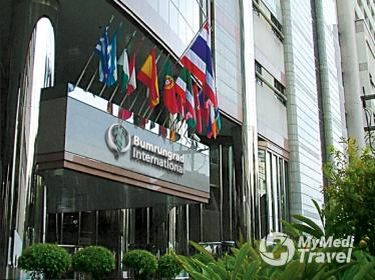


 Glinda Deblois, 22 November 2020
  Airport pickup
 Family accommodation
 Free Wifi
 Hotel booking


 Read More


No Time?
Tell us what you're looking for and we'll reach out to the top clinics all at once
 Free
Free  Best Price
  Widest Selection
  Risk-Free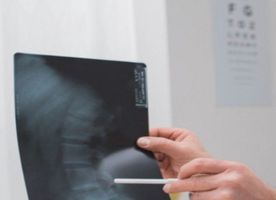

What does the Procedure Involve?
Spinal Fusion
Spinal fusion is by far the most commonly performed scoliosis surgery for teenagers and adults. This surgery involves fusing two or more adjacent vertebrae (the small, interlocking bones of the spine) together, which will cause the vertebrae to grow together at the spinal joint and form a solid bone that cannot move independently. This will limit the movement of your spine.
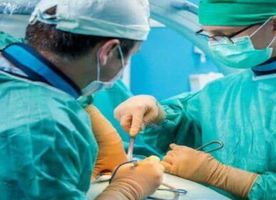
The vertebrae are fused together using a bone graft, screws, and rods. The rods keep your spine in a straight position, while the screws hold them in place. The bone graft and vertebrae eventually fuse together into a single bone. The procedure is typically performed under general anesthesia.
Fusion-less
Fusionless surgery is a relatively new approach to treating scoliosis. As opposed to spinal fusion, which limits movement and growth, fusion-less can preserve the movement and growth of your spine and this type of surgery is usually done on children.
Fusionless surgery involves applying constant pressure on the outer side of a spinal curve. It aims to slow or even stop the growth of the curve’s outer side, while the inner side can continue to grow normally. Over time, the lateral curvature should reduce as the spine becomes straighter.
Growing system (special rods)
In younger children, generally those under the age of 10, surgery to insert special rods alongside the spine can be done. The rods are anchored to the spine to help maintain or correct the spine’s curvature while the child grows. After 6 to 12 months, the child needs to return to their specialist to have the rods lengthened to keep up with their growth. This can be done in two ways:
-
Through a minor surgery in which the rods are extended through a small incision in the back.
-
Using a remote control that can activate magnets inside the rods. With this procedure, no cuts are needed to lengthen the rods.
This type of surgery is done in young children because if spinal fusion is done at too young of an age, it could cause several complications, such as less room for the lungs to develop.
How Long Should I Stay in Thailand?
Although it depends on the type of surgery you underwent, you may need to stay in the hospital for two to seven days. Children may need to stay longer, usually for 10 days. It is recommended that you stay in Thailand for about eight to ten more days for follow-up checkups and stitches removal.
What's the Recovery Time?
Full recovery can take about three to six months. However, school and work may be resumed after 4 to 6 weeks. Children may need to avoid sports roughly a year after surgery, while adults may need to avoid strenuous activities for a few months.
What About Aftercare?
After surgery, you may need to wear a brace to keep your spine in proper alignment. You may also need to learn new techniques to sit, stand, and walk safely. Physical rehabilitation is recommended to help you learn ways to move safely and to strengthen your back.
What's the Success Rate?
Spinal fusion surgery has a high overall success rate. The University of Washington’s Department of Orthopaedics & Sports Medicine reported that spinal fusion can achieve approximately 70% curve correction and has around 2 to 3% chances of complications when performed on someone under 16 with idiopathic scoliosis. However, the data for fusion-less surgery is not yet available.
As with any surgery, scoliosis surgery carries some risks, such as infection, pain, nerve damage, failure to heal, and excessive bleeding.
Are there Alternatives to Scoliosis Surgery?
If the scoliosis isn’t severe, your doctor may recommend the following:
-
Exercise – you can talk to a healthcare professional about an exercise program to strengthen and stretch your back.
-
Spinal injections – if scoliosis irritates or puts pressure on the nerves, your doctor may inject steroids to temporarily ease your discomfort.
-
Back braces – these are usually recommended for children, although adults may also benefit from using them. A back brace can help support your back and stop it from getting worse.
What Should You Expect Before and After the Procedure
Before scoliosis surgery, your scoliosis can be severe, cause pain, or prevent you from doing your normal activities. After surgery, you should be able to enjoy your daily activities without discomfort or pain.
This information has been accurately sourced and verified by a medical professional for its accuracy, however, we strongly recommend you to consult with your doctor before pursuing medical procedures overseas.


 MyMediTravel CN