 Sign in
  Add Your Clinic
  USD $
USD $



Ophthalmology in Turkey
Search and Compare the Best Clinics and Doctors at the Lowest Prices for Ophthalmology in Turkey
Surgery TR International
 Istanbul, Turkey


 Tracy D, 14 July 2022
  Airport pickup
 Family accommodation
 Free Wifi
 Health insurance coordination
 Read More
 Bayindir Sogutozu Hospital
Ankara, Turkey 


formedi clinic Turkey
Antalya, Turkey 


 Pashtoon Haider, 03 October 2023
Airport pickup
Pashtoon Haider, 03 October 2023
Airport pickup
 Cafe
Family accommodation
Cafe
Family accommodation
 Flight booking
Sanitas Clinic
Antalya, Turkey 


Eragoz Eye Clinic
Antalya, Turkey 


MOI Health
Istanbul, Turkey 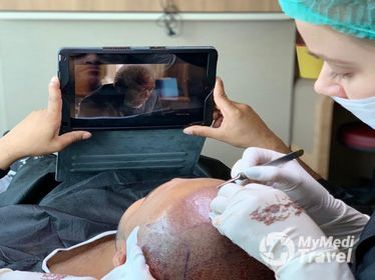


Veni Vidi Eye Group
Istanbul, Turkey 


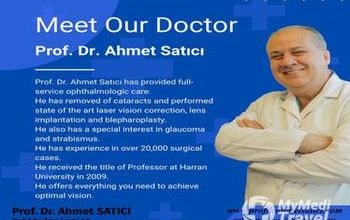
Prof. Dr. Ahmet Satici
Istanbul, Turkey 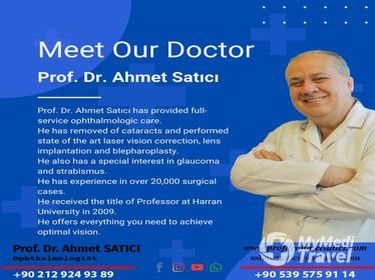


Memorial Kayseri Hospital
Kayseri, Turkey 


Medical Park Ataşehir Hospital
Istanbul, Turkey 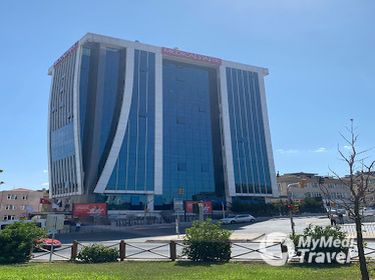


 Vickie Pratt, 04 February 2024
Airport pickup
Cafe
Family accommodation
Free Wifi
Vickie Pratt, 04 February 2024
Airport pickup
Cafe
Family accommodation
Free Wifi

Medical Park Ankara Hospital
Ankara, Turkey 


 Lillie Poole, 30 July 2023
Airport pickup
Family accommodation
Free Wifi
Health insurance coordination
Lillie Poole, 30 July 2023
Airport pickup
Family accommodation
Free Wifi
Health insurance coordination
Medical Park Antalya Hospital
Antalya, Turkey 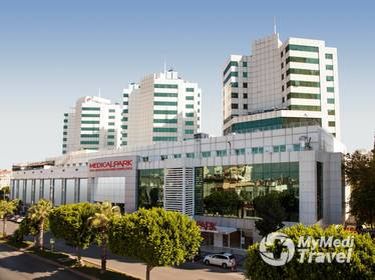


VM Medical Park Pendik Hospital
Istanbul, Turkey 


 Sybil Nunez, 03 October 2023
Airport pickup
Family accommodation
Free Wifi
Health insurance coordination
Sybil Nunez, 03 October 2023
Airport pickup
Family accommodation
Free Wifi
Health insurance coordination
VM Medical Park Florya Hospital
Istanbul, Turkey 


 Latoya Shelton, 09 March 2023
Airport pickup
Family accommodation
Free Wifi
Latoya Shelton, 09 March 2023
Airport pickup
Family accommodation
Free Wifi
 Hotel booking

Medical Park Gaziosmanpasa Hospital
Istanbul, Turkey 


 Adeline Simmons, 24 May 2024
Airport pickup
Family accommodation
Free Wifi
Health insurance coordination
Adeline Simmons, 24 May 2024
Airport pickup
Family accommodation
Free Wifi
Health insurance coordination
VM Medical Park Bursa Hospital
Istanbul, Turkey 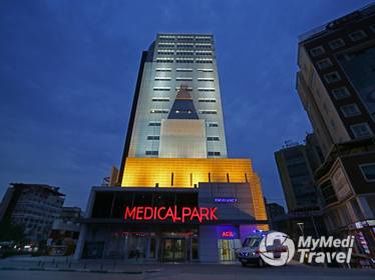


Medical Park Izmir Hospital
Izmir, Turkey 


 Leticia Bender, 07 May 2023
Airport pickup
Family accommodation
Free Wifi
Hotel booking
Leticia Bender, 07 May 2023
Airport pickup
Family accommodation
Free Wifi
Hotel booking
Central Hospital Etiler
Istanbul, Turkey 


 Orville Stone, 21 December 2023
Airport pickup
Orville Stone, 21 December 2023
Airport pickup
 Document legalisation
Family accommodation
Free Wifi
Document legalisation
Family accommodation
Free Wifi

Central Hospital Kozyatagi
Istanbul, Turkey 


 Autumn Hanna, 02 January 2024
Airport pickup
Family accommodation
Free Wifi
Health insurance coordination
Autumn Hanna, 02 January 2024
Airport pickup
Family accommodation
Free Wifi
Health insurance coordination
Central Hospital Atasehir
Istanbul, Turkey 


 Rolando Glenn, 11 February 2024
Airport pickup
Document legalisation
Family accommodation
Free Wifi
Rolando Glenn, 11 February 2024
Airport pickup
Document legalisation
Family accommodation
Free Wifi


Our partner clinics in Turkey are accredited by the following associations


 Free
Free  Best Price
  Widest Selection
  Risk-Free


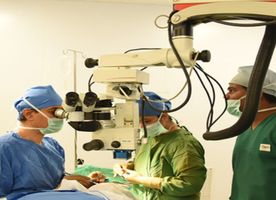

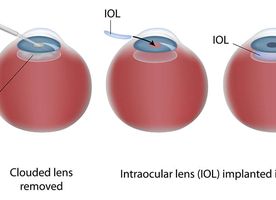

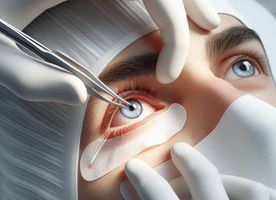
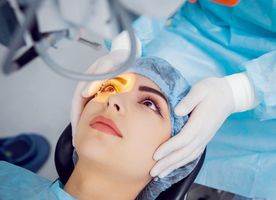
Ophthalmology is a branch of medicine and surgery that focuses on the diagnosis and treatment of eye disorders. Medically trained doctors who care for patients who have eye and vision conditions are called ophthalmologists and are the only practitioners diagnosed and trained to treat all eye and vision problems. Their practice is very diverse, dealing with a wide range of issues and clinical conditions. Some of the most common conditions that they treat and manage include:
- Minor and major eye injuries
- Infectious eye disease
- Dry eyes
- Proptosis (bulged eyes)
- Glaucoma
- Cataracts
- Corneal pathology
- Retinal problems, such as bleeding and detachment or tears of the retina
- Squints
- Eye-related neurological problems
- Excessive tearing
- Intraocular inflammation
- Chronic eye diseases, such as age-related macular degeneration and diabetic retinopathy.
An ophthalmologist can offer a wide range of medical services, including surgical eye procedures. Some of the most common procedures that ophthalmologists perform are as follows:
- Eye examinations.
- Specialized tests, such as ultrasonography of the eyes and optical coherence tomography (OCT).
- Refractive surgery to correct vision, such as LASIK.
- Cataract surgery.
- Glaucoma surgery.
- Cancer treatment.
- Reconstructive surgery to repair birth abnormalities or trauma, such as crossed eyes.
- Neoplasm removal.
- Corneal transplants.
- Repairing torn or detached retinas.
- Strabismus surgery.
- Oculoplastic surgery (plastic surgery around the eye).
- Prescribing and fitting glasses and contact lenses.
How Long Should I Stay in Turkey?
Your length of stay depends on the type of treatment you undergo. In general, you may need to stay in Turkey for at least a week or to let your eyes recover and to attend follow-up checkups, where your ophthalmologist checks your condition and make sure that your eyes are healing properly. If everything is fine, they will allow you to leave for home. However, for some surgery, such as retinal detachment surgery, you should avoid flying until your eyes have fully healed. Therefore, it is best that you wait 3 to 4 weeks, sometimes even longer, before you travel home.
What's the Expected Recovery Time?
Recovery time depends on the type of surgery you underwent, your age, and overall health. It is generally recommended to rest your eyes for a few days. With LASIK, you may be able to return to work after a day. After a corneal transplant, you should wait for 2 to 3 weeks until you go back to work.
What Aftercare is Required?
Your ophthalmologist will give you instructions to care for your eye after the procedure. It is crucial that you follow all of them to have a quick recovery and obtain optimum results. To keep the result or to prevent complications, you will need to make some lifestyle changes, such as avoid smoking and staying active. You also need to attend regular checkups, typically once a year, with your local eye doctor or your ophthalmologist in Turkey.
What's the Success Rate?
Thanks to the continuous advancement of ophthalmology, eye treatments, and surgeries are now highly successful and safe. For instance, the latest research of LASIK showed that it has a 99% success rate in achieving 20/40 vision or better, whereas the success rate of corneal transplant is as high as 90%. However, it is important to be aware of the risks and side effects of eye treatments and surgeries, such as dry eyes, temporary visual problems, overcorrections, under correction, astigmatism, regression, and, very rarely, vision loss.
Are there Alternatives?
For some eye problems, you may be able to go to an optometrist as an alternative. However, if your conditions need to be treated through surgery, your optometrist will refer you to an ophthalmologist.
This information has been accurately sourced and verified by a medical professional for its accuracy, however, we strongly recommend you to consult with your doctor before pursuing medical procedures overseas.

 Istanbul, Turkey
  Ankara, Turkey
  Antalya, Turkey
  Antalya, Turkey
  Antalya, Turkey
  Istanbul, Turkey
  Istanbul, Turkey
  Istanbul, Turkey
  Istanbul, Turkey
  Ankara, Turkey




 MyMediTravel CN