 USD $
USD $

Tubal Ligation Reversal in Lithuania
Search and Compare the Best Clinics and Doctors at the Lowest Prices for Tubal Ligation Reversal in Lithuania



Find the best clinics for Tubal Ligation Reversal in Lithuania
No pricing info available
India offers the best prices Worldwide
Price: $ 136
From 82 verified reviews
Gerardas Žalenas, 18 September 2020
Nuoširdžiai dėkoju gydytojui med. m. dr. Gintautui Radžiūnui ir jo komandai (gyd. R. Mačiulytei, p. Gražinai, seselei) už profesionalią ir jautriai atliktą kolonoskopiją. Jų darbą galiu įvertinti vieninteliu žodžiu - "HARMONINGA". Pagarbiai, Gerardas Žalėnas2020 09 03
WHY US?
At Medijump, we're making medical easy. You can search, compare, discuss, and book your medical all in one place. We open the door to the best medical providers worldwide, saving you time and energy along the way, and it's all for FREE, no hidden fees, and no price markups guaranteed. So what are you waiting for?

Free

Best Price

Widest Selection

Risk-Free
What you need to know about Tubal Ligation Reversal in Lithuania
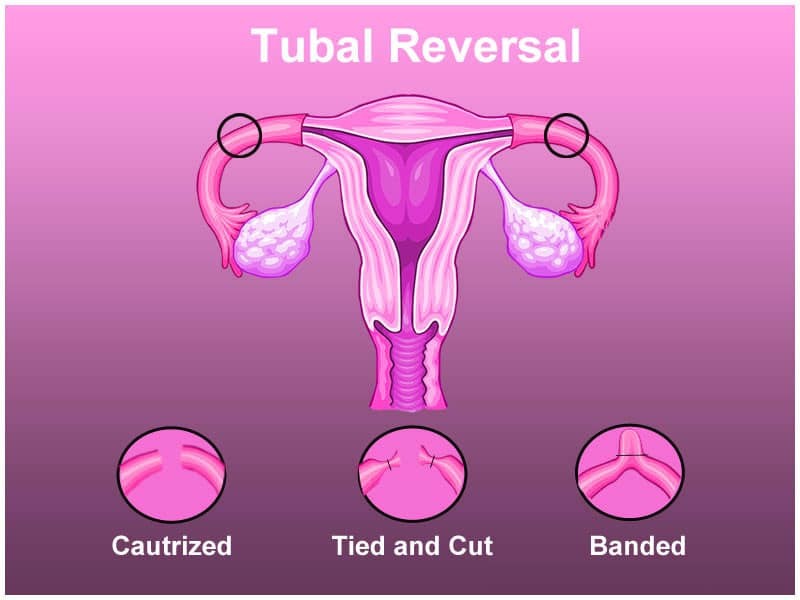
Tubal Ligation Reversal, also referred to as Tubal Sterilization Reversal or Microsurgical Tubal Reanastomosis, is the surgical procedure to restore female fertility after a tubal ligation was performed, often many years later. The procedure involves rejoining the separated parts of the Fallopian tubes, allowing for the possibility to conceive. Tubal ligation is commonly referred to as "having your tubes tied".
During a tubal ligation reversal, the blocked segments of the fallopian tubes are reconnected to the remainder of the fallopian tubes. This may allow eggs to again move through the tubes and sperm to travel up the fallopian tubes to join an egg.
Tubal ligation reversal is more likely to be successful if your tubal ligation was originally performed using clips or rings, rather than if segments of your fallopian tubes were burned in order to close them off (electrocautery). Some types of sterilization, such as the Essure or Adiana systems, aren't considered reversible.
What does a Tubal Ligation Reversal Procedure Involve?
Before the procedure, you and your partner will need to get a complete physical exam to find out if there is any condition that might keep you from getting pregnant after a tubal reversal. The physical exam usually includes a blood test, imaging test, and hysterosalpingogram (HSG). Your partner may also need to gets tests such as a sperm count and semen analysis to find out if there is any fertility problem. You and your doctor will need to discuss the success rate and your ability to get pregnant after the procedure. You should also discuss other options for pregnancy.
During the procedure, your doctor will likely use robotic or laparoscopic surgical equipment. A laparoscopic is a small tube with a tiny camera and surgical instrument attached to it. Your doctor will first look at your fallopian tubes using the laparoscopic camera. The tiny camera is put into your abdomen through a tiny incision. If your doctor sees that you have enough fallopian tube left and everything looks healthy, they will perform the surgery.
Once your doctor has decided it is okay to perform the surgery, you will be given general anesthesia. The surgery will also be done with laparoscopy, meaning your surgeon will make several incisions in your abdomen and insert a camera and small instruments to do the surgery. Using the microscopic instruments attached to the end of the laparoscope, your doctor will remove any damaged sections of your fallopian tubes and any devices from your tubal ligation, such as clips or rings that were used to block your tubes. Small stitches are used to reattach the undamaged ends of your fallopian tubes to the uterus. When the tubes are reconnected, your doctor will inject a dye into one end of each tube to make sure that the tubes have been reattached successfully.
Another way to carry out the surgery is a procedure called minilaparotomy. During this procedure, your doctor will make an incision in your abdomen to take the ends of your fallopian tube out of your abdomen. Then, your surgeon will remove the damaged parts of your fallopian tube and reconnect the healthy parts while the tubes are outside your body.
How Long Should I Stay in Lithuania for a Tubal Ligation Reversal Procedure?
The whole procedure usually takes about 2 to 3 hours. It can be done in a hospital or an outpatient center. If everything goes well and the surgery is completed using “microsurgical” techniques, you may be able to go home around 2 to 4 hours after surgery. However, some women will need to stay in the hospital for 1 to 3 days. After being discharged from the hospital, you will have to stay in Lithuania for between 1 to 2 weeks or until your doctor gives you the all-clear to travel home. During your stay in Lithuania you will attend follow-up checkups.
What's the Recovery Time for Tubal Ligation Reversal Procedures in Lithuania?
The recovery time depends on the surgical method your doctor used. Typically, recovery takes about one to two weeks until you can resume your normal activities. During the recovery period, you may experience pain and tenderness around the incision. To help with the pain, your doctor may prescribe pain medication, or you can take over-the-counter medication. Many patients also feel extreme weakness during the recovery period. You should not bathe for 48 hours after your surgery and your stitches will dissolve.
What sort of Aftercare is Required for Tubal Ligation Reversal Procedures in Lithuania?
You will need to follow all post-operative instructions that your doctor gives you. You will not have any activity or dietary restrictions after the surgery, but you should avoid any heavy lifting or sexual activity for a certain period of time. Your doctor will give you a timeline on how long you should avoid these activities. Normally, attempts to conceive can begin within four weeks after the procedure. Do not rub the incision, especially when you want to clean it, instead pat it gently.
What's the Success Rate of Tubal Ligation Reversal Procedures in Lithuania?
The success rate of tubal ligation reversal can vary widely, depending on various factors, including maternal age. Women under 35 tend to have a much higher success rate. Generally, 50% to 80% of women who have tubal ligation reversal can have successful pregnancies. While the success rate for women under 35 is 70% to 80%, women over 40 only have around 30% to 40% success rate.
Like any surgery, tubal ligation reversal also has potential risks and can lead to complications. Although it is rare, you will need to make sure that you understand all the risks and complications. Risks associated with this procedure include:
- Infection
- Bleeding
- Injury to nearby organs
- Ectopic pregnancy, a life-threatening condition where a fertilized egg grows outside of your womb
- Inability to get pregnant after the procedure
- Anesthesia complications.
For an in-depth analysis and a look at how Tubal Litigation Reversal Procedures are performed, watch this short video
Are there Alternatives to Tubal Ligation Reversal Procedures in Lithuania?
You may wish to consider in vitro fertilization (IVF) as an alternative to tubal ligation reversal. During IVF, your eggs are mixed with your partner’s sperm outside of the womb in a lab. The fertilized eggs are implanted directly into your uterus. You can also consider IVF if you do not get pregnant after a tubal ligation reversal.
Whilst the information presented here has been accurately sourced and verified by a medical professional for its accuracy, it is still advised to consult with your doctor before pursuing a medical treatment at one of the listed medical providers
No Time?
Tell us what you're looking for and we'll reachout to the top clinics all at once
Enquire Now

Popular Procedures in Lithuania
Prices Start From $0

Prices Start From $242
Prices Start From $683
Prices Start From $322
Recommended Medical Centers in Lithuania for Tubal Ligation Reversal

- Interpreter services
- Translation service
- Religious facilities
- Medical records transfer
- Medical travel insurance
- Health insurance coordination
- TV in the room
- Safe in the room
- Phone in the room
- Private rooms for patients available

- Interpreter services
- Translation service
- Religious facilities
- Medical records transfer
- Medical travel insurance
- Health insurance coordination
- TV in the room
- Safe in the room
- Phone in the room
- Private rooms for patients available
- Interpreter services
- Translation service
- Religious facilities
- Medical records transfer
- Medical travel insurance
- Health insurance coordination
- TV in the room
- Safe in the room
- Phone in the room
- Private rooms for patients available

- Interpreter services
- Translation service
- Religious facilities
- Medical records transfer
- Medical travel insurance
- Health insurance coordination
- TV in the room
- Safe in the room
- Phone in the room
- Private rooms for patients available

- Interpreter services
- Translation service
- Religious facilities
- Medical records transfer
- Medical travel insurance
- Health insurance coordination
- TV in the room
- Safe in the room
- Phone in the room
- Private rooms for patients available

- Interpreter services
- Translation service
- Religious facilities
- Medical records transfer
- Medical travel insurance
- Health insurance coordination
- TV in the room
- Safe in the room
- Phone in the room
- Private rooms for patients available

- Interpreter services
- Translation service
- Religious facilities
- Medical records transfer
- Medical travel insurance
- Health insurance coordination
- TV in the room
- Safe in the room
- Phone in the room
- Private rooms for patients available

- Interpreter services
- Translation service
- Religious facilities
- Medical records transfer
- Medical travel insurance
- Health insurance coordination
- TV in the room
- Safe in the room
- Phone in the room
- Private rooms for patients available

- Interpreter services
- Translation service
- Religious facilities
- Medical records transfer
- Medical travel insurance
- Health insurance coordination
- TV in the room
- Safe in the room
- Phone in the room
- Private rooms for patients available

- Interpreter services
- Translation service
- Religious facilities
- Medical records transfer
- Medical travel insurance
- Health insurance coordination
- TV in the room
- Safe in the room
- Phone in the room
- Private rooms for patients available